Weekly · strength before tricks · poles already in the room
Pole Dance Classes in Blackpool
Pole dance classes in Blackpool for anyone who has watched a clip, thought "that is proper strength work", and had nowhere obvious to try it. The poles are bolted into the floor of our town-centre studio, the first hour goes on grip and spins rather than anything acrobatic, and all you carry through the door is a pair of shorts and some water. £10 for a single class, £32 if you take four.
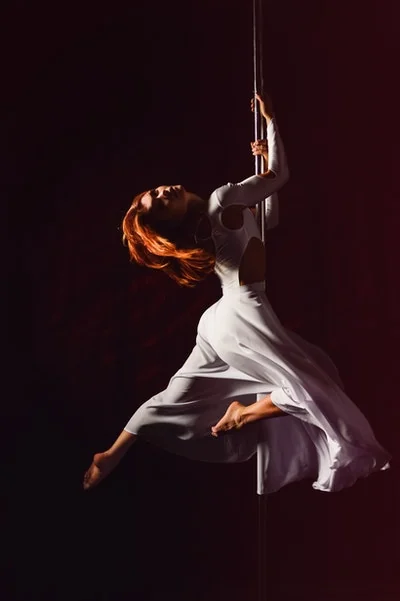
Before your first grip
Send one line and the pole timetable comes to you.
Pole runs every week in the town centre. Which evening it falls on, and the door you want, are deliberately kept off this page so nothing here goes stale — both reach you inside a day, with a short note about kit.
- £10 for one class · £32 across four weeks
- No strength test, no audition, nobody watching
- The poles belong to the studio, not to you
The essentials
- Where Blackpool town centre studio
- When Weekly, evening — sent by reply
- Length One hour
- Level Beginners upward
- Ages 17 – 75
- Partner Not needed
The class
Strength you can watch arriving.
Pole in Blackpool, taught fitness first
Nobody walks into a first pole class able to do anything, including the people who look as though they could. The hour opens at floor level — shoulder position, hand placement, the difference between hanging off a pole and genuinely holding yourself on one — because every single thing above head height sits on top of that. Pole sits on the same weekly Blackpool class timetable as everything else we run, and it pulls in the broadest mix of people of the lot: gym regulars after upper-body work, people who haven't exercised deliberately since school, and a steady stream who only signed up because a mate refused to come by herself.
Fitness first is not a slogan here, it's the running order. Spins, walks around the pole and slow controlled climbs come long before anything that looks impressive from the back of the room, and a teacher would far rather see one clean hold than five scrambled attempts. What's unusual about pole is how honest the feedback is — the pole either takes your weight or it doesn't, and the evening it finally does tends to be audible. Bruises turn up early and stop mattering, grip builds fast, and somewhere around a month in most people notice they're carrying shopping up two flights without thinking about it. Progress gets measured in what your hands can hold rather than in anything a set of scales says, and that alone keeps a lot of people coming back.
What an hour on the pole involves
A warm-up that treats conditioning as the point rather than a formality, floor and standing work to wake up the hands, shoulders and back, then time on the poles themselves with the room rotating so nobody stands and watches anyone. Stretching closes it, and it's the ten minutes people underrate hardest. Dancers who take to the performance side of pole often pick up heels as well, and groups chasing one private session rather than a weekly habit tend to book the pole dancing hen party instead.
A block of four
Week one is grip. Week four leaves the floor.
Roughly how four weeks tend to go. Roughly — hands and shoulders set their own timetable and we work to it.
Hands on
Grip, body position and a first spin, most of it with both feet still touching the ground.
Spinning
Two or three spins strung together, plus how to come out of one without landing like a dropped bag.
Off the ground
The climb, done properly: legs doing the work, arms steering, and a sit at the top of it.
Strung together
Spin, climb, sit and dismount as one short sequence to music, with the rest of the room cheering.
Side effects
What pole hands back.
The dancing is what you came for. This lot arrives anyway.
- Upper-body strength that shows up faster than expected
- Grip that improves everything else you lift
- Core work with no reps to count
- Training that never repeats the same hour twice
- Flexibility that turns up as a by-product
- A goal that isn't a distance or a dress size
- A room that applauds first attempts loudest
- Somewhere useful to be on a wet Fylde coast evening
Asked and answered
Pole dance in Blackpool: the honest answers.
Ten things people want cleared up before booking a pole dance class in Blackpool.
IDo I need to be strong already to start pole?
No, and almost nobody is. Strength is what the class builds rather than what it asks for, which is why the early weeks live at floor and standing height. If you can hold a shopping bag you have enough to begin with.
IIAm I signing up for a workout or for dancing?
Ours leans fitness first. Conditioning, grip and controlled movement carry the hour, with the flow and musicality laid over the top once your body can hold the shapes. People arrive for one half and usually stay for both.
IIIWhat should I wear for pole?
Shorts and a vest or crop top — skin on the pole is what grips, so leggings actually make it harder. Bare feet are normal and no heels are needed. We don't sell, lend or supply clothing, shoes or props of any kind, so bring your own.
IVDo I need my own pole?
Not at all. The poles are fixed into the studio floor and cleaned between sessions, and there are enough of them that nobody spends the hour queueing. Practising at home is a thing some people do later, but it's never expected.
VWill I be upside down in the first class?
Very unlikely, and never before you're ready for it. Inverting is a strength milestone rather than a week-one party trick, and it comes when your shoulders and core can protect your neck. Plenty of dancers stay happily the right way up for months.
VIWhat will a session set me back?
A single class is £10, handed over when you turn up, and four consecutive weeks are £32, which works out at £8 each. Nothing to join, nothing to cancel, no contract sitting in your bank account.
VIIWhich studio has the poles?
In a studio in Blackpool town centre, walkable from Blackpool North station and the tram, with parking a short distance away. The exact venue reaches you with your timetable, since rooms move about as the schedule fills up.
VIIIIs there an age or size the class suits best?
Adults from seventeen upwards, and no particular shape among them. Pole rewards technique and patience rather than a body type, and the strongest climber in a room is regularly the person who assumed she'd be worst.
IXDoes pole dancing hurt?
It pinches at first — skin grip is what keeps you up there, so early bruises on the inner leg are standard and fade quickly. Nothing should ever be sharp or painful, and anything that is means we adjust the move rather than push through it.
XCan I do one class before I commit to a block?
That's exactly what the £10 drop-in is for. Come once, see how your hands feel the next morning, and start a four-week block afterwards if you want to. If it turns out not to be your thing, that is genuinely the end of it.