Weekly · partners rotate all evening · start from nothing
Tango Dance Classes in Blackpool
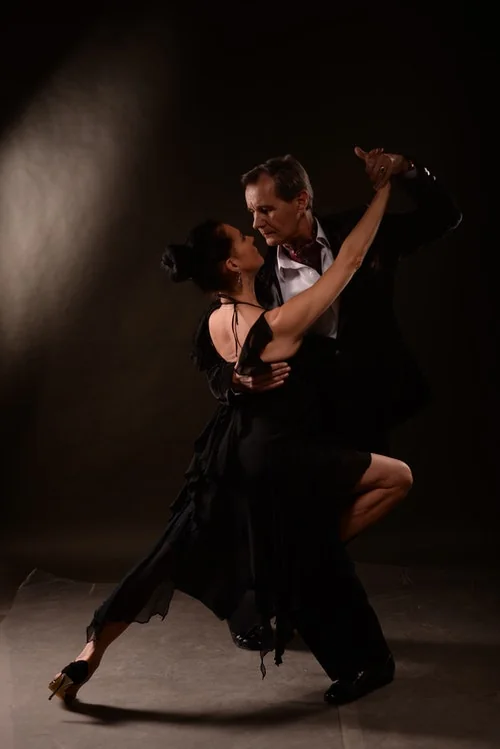
Tango dance classes in Blackpool, for anyone who has watched two people cross a floor in a close embrace and assumed the whole thing was rehearsed. Hardly any of it is. Tango is made up as it happens, one step offered and one step answered, which is why we teach it as a conversation and not a routine. An hour a week in the town centre, £10 to come and see, £32 for a block of four.
Your way in
One message, and the tango details are with you tomorrow.
Tango has its own evening each week in the town centre. Rather than print a night and a building that might change by next term, we send both by email — usually the same day, along with a short note on shoes.
- £10 for one evening · £32 for four of them
- Come alone — nobody in the room stays with one partner
- Lead or follow, whichever appeals, whoever you are
The essentials
- Where Blackpool town centre studio
- When Weekly, evening — sent by reply
- Length One hour
- Level Beginners upward
- Ages 17 – 75
- Partner Not needed — the room rotates
The class
A dance with no steps to memorise.
Tango in Blackpool, learned by walking
Tango starts with something absurdly ordinary: walking. Two people, an embrace, and a walk taken together to music — get that honest and the rest of the vocabulary has somewhere to live. Which makes it a strange dance to be frightened of, though almost everyone arriving off our weekly Blackpool timetable is convinced they'll be the stiffest person in the room. Nobody is watching. Everybody is far too busy counting their own feet and trying not to tread on someone's toe in front of witnesses. There is nothing to have memorised beforehand and nothing you could have practised at home, which levels the room out within about ten minutes.
The embrace is what people ask about before they book, and it settles quickly. It can be open, with a comfortable arm's length between you, or close, and you decide which — every single time, with every partner, no explanation needed. Partners change through the evening, which does two things: it stops one person's habits becoming your technique, and it means leading and following stay skills rather than roles. Leads and follows are chosen by preference here, not by who you are, and plenty of dancers work at both because it makes each one clearer. It usually takes a couple of tracks to stop worrying about where your arms have got to.
Inside a tango hour
The walk first, alone and then in pairs, because it never stops being the thing that needs work. Then one idea for the evening — a pause, a cross, a turn — layered on and practised with several partners in turn. It closes with a few tracks of nothing but dancing, no teaching, so the improvisation gets a run. The music is mostly old Argentine recordings, and the crackle on them turns out to be half the pleasure. Dancers who like the hold often try ballroom as well, and couples who've fallen for the music sometimes take a tango into their first dance, which is more achievable than it sounds.
Across four evenings
From walking in a line to actually dancing.
How a block of four usually unfolds — though a room that wants a second week on the embrace gets one.
The walk
Posture, the embrace and moving as two people rather than one pushing the other around the floor.
Pauses and weight
Stopping on purpose, changing which foot you're on, and why the pause is half of what tango is.
The cross
The step everyone recognises, taken apart until it happens because it was led, not because it was expected.
Making it up
Ordering what you know however the music suggests, with a track or two danced end to end and nobody counting aloud.
Beyond the dancing
What tango tends to leave you with.
None of it is why people book. All of it turns up regardless.
- Balance that improves without a single wobble board
- An hour of listening properly to another person
- Posture your physio would sign off on
- Comfort with being close to people you've just met
- A dance that works in any room with a bit of floor
- Music you'd never have gone looking for
- Something to do on a Fylde coast night in February
- A skill that travels to every tango floor going
Before you book
Tango in Blackpool: the things people ask first.
Ten answers for anyone weighing up a tango dance class in Blackpool.
ICan I come to tango without a partner?
Yes, and a good half of the room does. Rotation runs all evening, so a solo dancer gets more turns and more variety than someone glued to one person. Couples who prefer to stay together only need to say so.
IIWhich tango do you teach?
Argentine social tango — improvised, danced in an embrace, the sort you'd find at a milonga anywhere in the world. It isn't the sharp-headed competition version you see on television, and it's far kinder to learn.
IIIIs the close embrace compulsory?
Never. Open embrace is taught alongside it and plenty of dancers stay there for months or for good. Distance is agreed between the two of you before each dance, and changing your mind mid-track is normal.
IVWhat shoes should I bring to tango?
Anything with a smooth-ish sole that lets you pivot and stays on your foot — leather-soled shoes, a low heel you already trust, or dance shoes if you own a pair. Grippy trainers fight every turn. We don't hire out, lend or sell footwear or props, so bring your own.
VDo I have to lead if I'm a man?
Not here. Roles go by preference, and swapping is encouraged because understanding the other half makes you better at your own. Say what you'd like to try and that's what you'll be taught.
VIWhat does an evening of tango set me back?
Tango is priced like everything else on our timetable: £10 if you're coming the once, or £32 booked as four weeks, which is £8 an evening. Nothing else to pay, nothing to cancel later.
VIIWhere does the tango class run?
A town-centre studio with a floor worth walking on, minutes from the trams and Blackpool North. We keep the address for the confirmation email so you always get the room we're genuinely in this term.
VIIIIs tango too slow to count as exercise?
It won't leave you red-faced, but an hour on your toes with your core holding you upright does more than it advertises. Ankles, calves and balance take most of the load. It is easy on the knees, which is why people keep doing it for decades.
IXHow long before I could dance a whole track?
Sooner than you'd guess, because a walk and a pause danced well is already tango. Four weeks usually gets you through a track without panic; the depth of it is the thing that keeps people coming for years.
XCan I try tango once before booking four weeks?
Yes — a single £10 evening tells you far more than any description can, particularly about whether the embrace and the music suit you. Blocks come round often enough that there's no need to decide on the spot.